Your Achilles has ached for six months. Physio helps a little, rest helps a little, and then someone at the gym tells you a peptide called BPC-157 sorted out his elbow in a few weeks. It sounds too good to be true, and in Cyprus it is suddenly everywhere.
Some of the excitement is justified and some of it runs ahead of the evidence. This guide explains what BPC-157 is, why it has such a strong reputation for healing, what it has actually been shown to do, who is likely to benefit, and how we use it as part of physician-led peptide therapy at Alpha Medical in Limassol.
What BPC-157 is
BPC stands for body protection compound. It is a chain of 15 amino acids whose sequence comes from a protein found naturally in human gastric juice, where it helps protect and repair the stomach lining. The version used in clinics is made in the laboratory, and unlike the natural protein it stays stable long enough to act elsewhere in the body.
It was first studied for the gut: ulcers, inflamed bowel and damage from anti-inflammatory painkillers. Researchers then noticed the same repair effect in tendons, ligaments, muscle and bone, and that is where its sporting reputation comes from.
How it helps tissue heal
Tendons and ligaments heal slowly because they have a poor blood supply. BPC-157 appears to work on exactly that weakness. In laboratory and animal studies it encourages new small blood vessels to grow into injured tissue, helps the cells that rebuild tendon survive and move into the damaged area, and damps down inflammation.
A 2011 study of rat Achilles tendons found that BPC-157 increased the outgrowth, survival and migration of tendon cells, the steps that decide how quickly a tear fills in with new tissue. A 2019 review of the musculoskeletal research found consistently positive results across tendon, ligament, muscle and bone injuries in animals.
What the human evidence shows
Human data are much thinner than the animal work, and it is worth knowing that before you start. The clearest clinical report comes from a US practice that treated 16 people with different kinds of knee pain using injections into the joint. Fourteen of the 16 reported meaningful relief, including 11 of the 12 who received BPC-157 on its own.
That is a small group with no comparison arm, so it shows promise rather than proof. In our experience, the patients who respond best are those with a specific soft-tissue injury that has stalled, rather than widespread pain with no clear cause.
What people use it for
At our Limassol clinic, BPC-157 is most often part of a plan for:
- Tendon problems that have not settled with rest and physio: Achilles, patellar, tennis and golfer's elbow
- Ligament and muscle strains, especially in people who train hard
- Recovery after orthopaedic surgery, alongside rehabilitation
- Joint pain linked to a specific injury
- Gut lining problems, where the oral form is used
BPC-157 and TB-500 together
BPC-157 is often paired with TB-500, a fragment of a natural repair protein called thymosin beta-4. BPC-157 works mainly at the injury site on blood supply and inflammation, while TB-500 helps cells move and organise new tissue across a wider area. In the knee report above, some patients received both. Whether the combination makes sense for you depends on the injury, and your physician will say so plainly.
Who it suits, and who it doesn't
The best candidates have a clear, identifiable injury, have already tried the basics, and are prepared to keep doing their rehabilitation while on the peptide. BPC-157 speeds up the body's repair; it does not replace loading a tendon properly.
Because it promotes new blood vessel growth, we do not use it in anyone with active or recent cancer. We also avoid it in pregnancy and breastfeeding.
What a course feels like
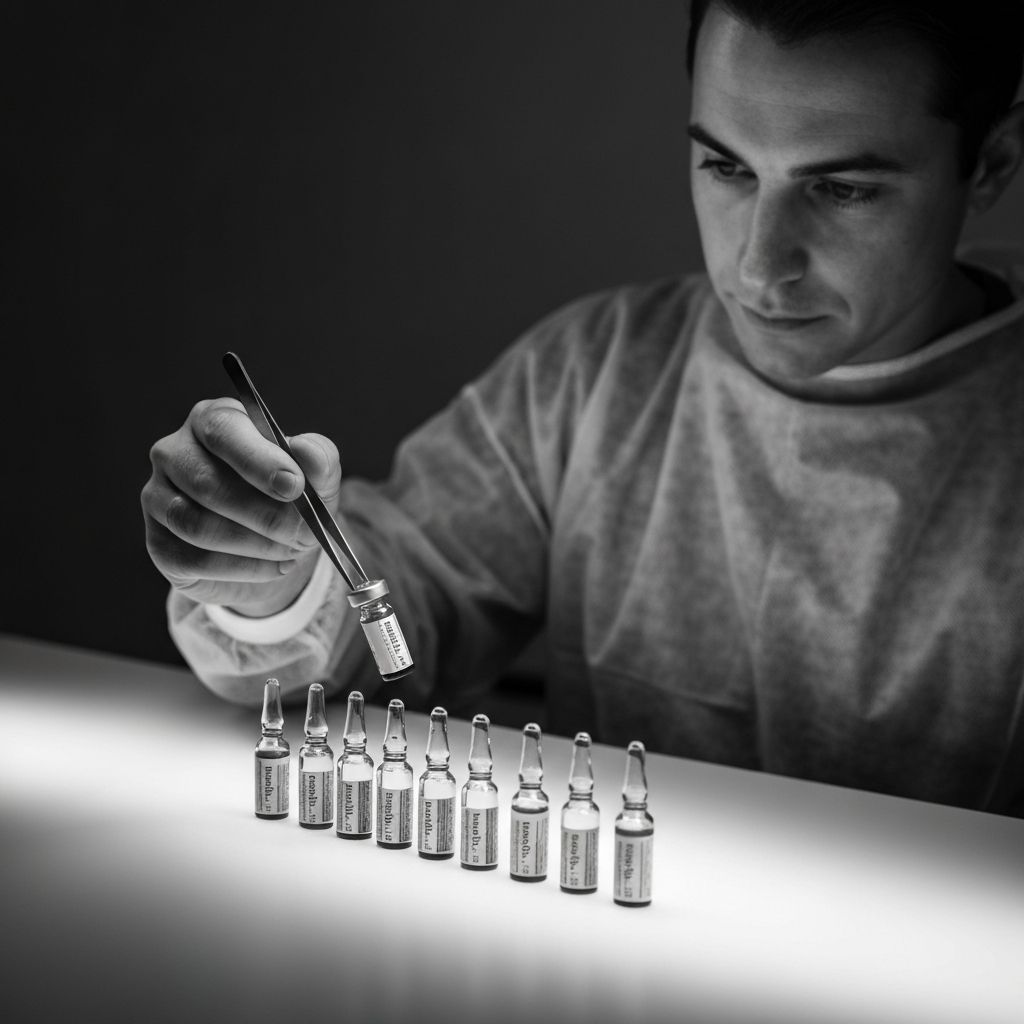
The injections themselves are tiny, given with an insulin-style needle into the skin near the injured area or on the abdomen, and most people find them easier than they expected after the first one. There is no downtime and you carry on training, within whatever limits your injury and your physio set.
The first change people usually notice is pain: a tendon that used to complain on the first steps of the morning starts to settle, often within two to three weeks. Strength and tolerance to load come back more slowly, over the rest of the course and beyond, and that is where your rehabilitation does most of the work. If nothing has shifted after a few weeks, we say so and change the plan rather than simply continuing.
How BPC-157 therapy works at Alpha Medical
Every peptide plan starts with a physician consultation about the injury, your history, your training and what you have already tried. Where it helps, we review imaging and run bloodwork, then set a protocol: how the peptide is given, for how long, and whether anything else should be added.
Most injury protocols use small injections under the skin, which we teach you to do at home. We follow up during the course and adjust it based on how the injury responds. Patients who want ongoing care can take BPC-157 through our Peptide Memberships, which include physician support and follow-up.
Ready to take the next step? Book a consultation at our contact page — or request an introductory Peptide Therapy guide below.