The weight is coming off. Clothes fit better, the scale moves every week, and friends are starting to comment. Then the stairs feel harder than they used to, or the weights at the gym feel heavier. That is often the first sign that some of the weight lost is muscle.
Losing some lean mass is normal with any large weight loss, and GLP-1 injections such as semaglutide (Ozempic, Wegovy) and tirzepatide (Mounjaro) are no exception. How much you lose is not fixed, though. This guide explains how much lean mass people lose on these medications, why it matters, and the protein, training and monitoring that protect it, as we use them at Alpha Medical in Limassol.
How much of the weight lost is muscle?
In the large semaglutide weight-loss trial, a group of participants had body composition scans. Almost 40% of the weight they lost was lean mass. A 2024 review of the GLP-1 based medications found lean mass made up roughly a quarter to two fifths of weight lost across studies, similar to what happens with dieting or surgery.
Two details soften that picture. Lean mass on a scan includes water and organs as well as muscle, so not all of it is muscle. And MRI studies suggest muscle quality can improve as fat stored inside the muscle falls. The amount still matters, especially if you are older or already have little muscle to spare.
Why protecting muscle matters
Muscle is your largest store of glucose and one of the main drivers of how much energy you burn at rest. It protects joints, keeps you steady on your feet and decides how strong you feel at 60 and 70. Losing a lot of it during weight loss can leave you lighter but weaker, and more likely to regain the weight as fat.
The people most at risk are adults over 50, people who did little strength training before starting, and anyone losing weight very fast on a high dose while eating very little.
Protein: the first line of defence
When appetite drops, protein is usually the first thing to fall, because meat, fish and eggs feel heavy. Expert guidance for older adults recommends at least 1.0 to 1.2 g of protein per kilogram of body weight a day, and more for people who are ill or losing weight. For most of our patients on GLP-1 treatment we set a target of 1.2 to 1.6 g per kilogram of goal weight.
In practice that means eating the protein first at every meal, spreading it across the day, and using simple options such as Greek yoghurt, eggs, fish, chicken or a protein shake on days when appetite is very low.
Strength training: the signal that keeps muscle
Protein supplies the building blocks; resistance training tells the body to keep using them for muscle. In a trial of adults maintaining weight loss for a year, combining exercise with a GLP-1 medication kept off more weight and removed about twice as much body fat as either on its own.
You do not need to live in the gym. Two to three sessions a week of full-body strength work, with weights, machines or bands, progressing gradually, is enough for most people. Walking helps your heart and mood but does not replace lifting.
- Two to three full-body strength sessions a week
- Big movements: squats or leg press, rows, presses, hinges
- Gradually heavier weights or more repetitions over the months
- Daily walking on top, not instead
Measure, don't guess
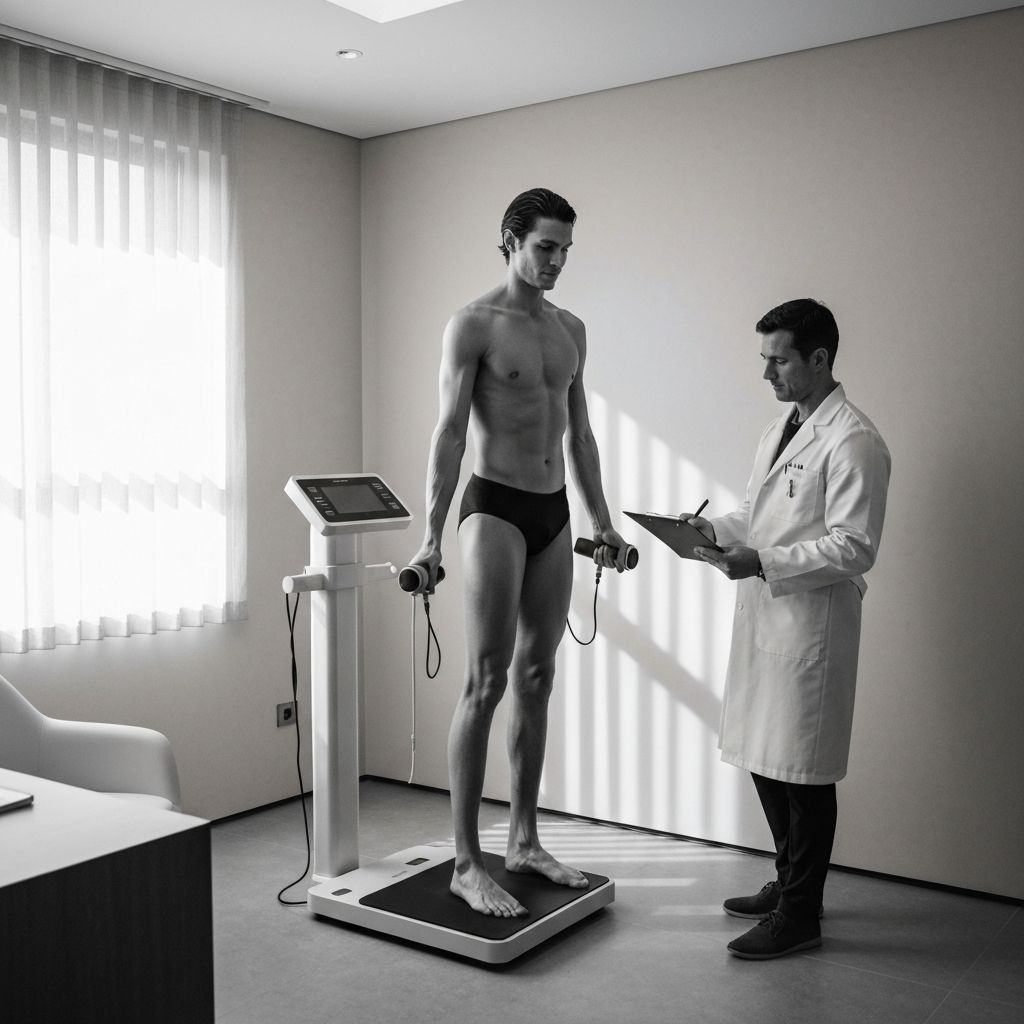
The scale cannot tell fat from muscle. We measure body composition with a DEXA or InBody scan before the first injection and repeat it during treatment, so we can see what is being lost. If lean mass is falling too fast, we change course: more protein, a training adjustment, or a slower dose increase.
Men with low testosterone lose muscle more easily, and correcting it can make a real difference to how much is kept. We check hormones in the baseline blood panel for exactly this reason.
How we protect muscle at Alpha Medical
Every weight loss programme starts with a physician consultation, bloodwork and a body composition scan. Your physician chooses the medication and dose increase, sets a protein target and a simple training plan, and repeats the scan during treatment so the plan responds to your results. Patients come to our Limassol clinic from across Cyprus, and many reviews can be done remotely after the first visit.
Ready to take the next step? Book a consultation at our contact page — or request an introductory Medical Weight Loss guide below.