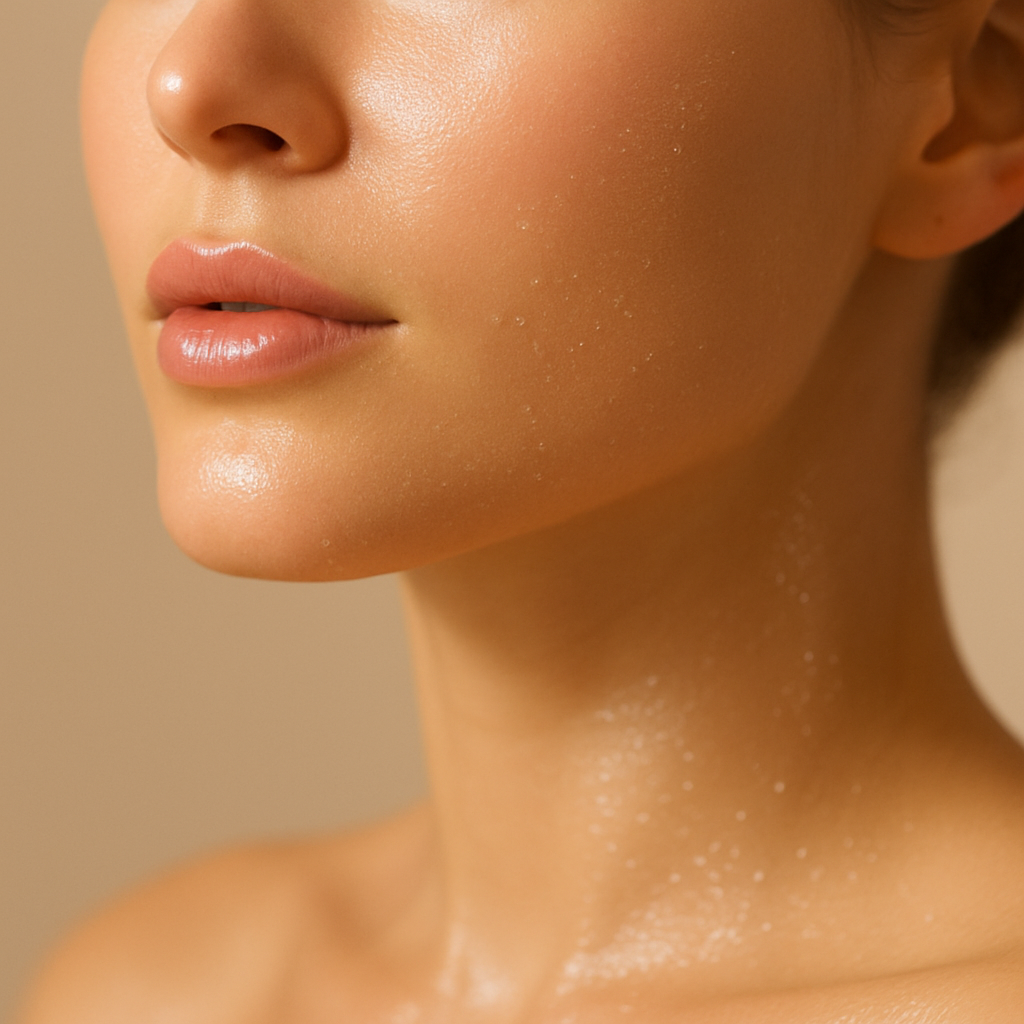
Ask three clinics for a skin booster and you may be offered three different products. All of them are injected in tiny amounts, none of them change the shape of your face, and all promise better skin. Underneath the shared label, though, some mainly add water, some firm, and some repair.
Summers in Cyprus are long and bright, and skin here tends to show dehydration, sun damage and redness earlier than people expect. This guide explains the main types of skin booster, what each one is best at, how to match them to what your skin needs, and how we build a skin quality plan at Alpha Medical in Limassol.
What a skin booster is
A skin booster is an injectable placed in the upper layers of the skin to improve its quality: hydration, smoothness, firmness, tone or repair. It is not a filler. Fillers sit deeper and hold a shape; skin boosters spread through the skin and change how it behaves, so the face looks the same, only fresher.
They fall into three broad groups: hydrating boosters made from hyaluronic acid, firming boosters that also stimulate collagen and elastin, and regenerative boosters that send repair signals to damaged or reactive skin.
Hydrating boosters: babyGLOW™, manGLOW™ and Skinvive
Our babyGLOW™ and manGLOW™ protocols use TEOSYAL® Redensity 1, which combines hyaluronic acid with amino acids, antioxidants, vitamins and minerals, placed across the whole face with a multi-point technique. The result is an even, rested glow, with fewer fine dehydration lines. manGLOW™ adapts depth and placement to thicker male skin.
Skinvive by JUVÉDERM® is a very soft hyaluronic acid designed for the cheeks. In a randomised, evaluator-blind study it improved cheek smoothness and the result lasted around six months. It gives a glassy, reflective finish where babyGLOW™ gives an all-over freshness; our Skinvive vs babyGLOW comparison goes into the detail.
Firming boosters: Profhilo
Profhilo carries one of the highest concentrations of hyaluronic acid of any injectable, bonded by heat so it spreads evenly and keeps stimulating the cells around it. A 2026 systematic review found improvements in laxity, elasticity, hydration and density on the face, neck, hands and body. It suits skin that has become thinner and crepey rather than simply dry, and needs only two sessions to start.
Regenerative boosters: PDRN, polynucleotides and NCTF 135
PDRN and polynucleotides are purified fragments of salmon DNA. Rather than hydrating, they work as repair signals that calm inflammation and support damaged tissue, which makes them the right choice for acne scarring, redness-prone skin, the thin skin under the eyes and recovery after laser or peels. A 2025 systematic review of polynucleotides in aesthetic medicine found improvements in skin quality, wrinkles and scars, with a good safety record.
NCTF 135 is a mesotherapy formula combining hyaluronic acid with more than 50 vitamins, amino acids, minerals and coenzymes. It nourishes tired, sun-dulled skin and works well as a maintenance treatment between other boosters.
How to match the booster to your skin
This is the order we think in at the consultation:
- Dull, dehydrated skin that has lost its glow: babyGLOW™ or manGLOW™
- Rough cheek texture and fine lines across the cheeks: Skinvive
- Crepey, thinning skin on the face, neck or hands: Profhilo
- Acne scars, redness or sensitive skin: PDRN or polynucleotides
- Thin, dark under-eye skin: polynucleotides
- Sun-tired skin that needs regular upkeep: NCTF 135
Skin boosters at Alpha Medical Limassol
Your physician examines your skin in daylight and under magnification, asks about your skincare, sun exposure and past treatments, and builds a plan around the main problem. Many patients need two boosters over a year rather than one, for example Profhilo to firm and babyGLOW™ to finish, or PDRN first to calm reactive skin.
Sessions take 20 to 45 minutes. Small bumps or redness settle within a day, and most people go back to work the same day. Courses usually run two to four sessions, with maintenance once or twice a year and daily sunscreen throughout. Patients come to our Limassol clinic from Nicosia, Larnaca and Paphos, and many combine a booster with Botox in the same visit.
Ready to take the next step? Book a consultation at our contact page — or request an introductory Medical Aesthetics guide below.